Promoting Access to Information and Social Accountability for the Socially Secluded
- Status
- Completed
- AIR approach
- Access, Resourcing
- FRAME
- Media Development
- Implemented in

What we’re doing
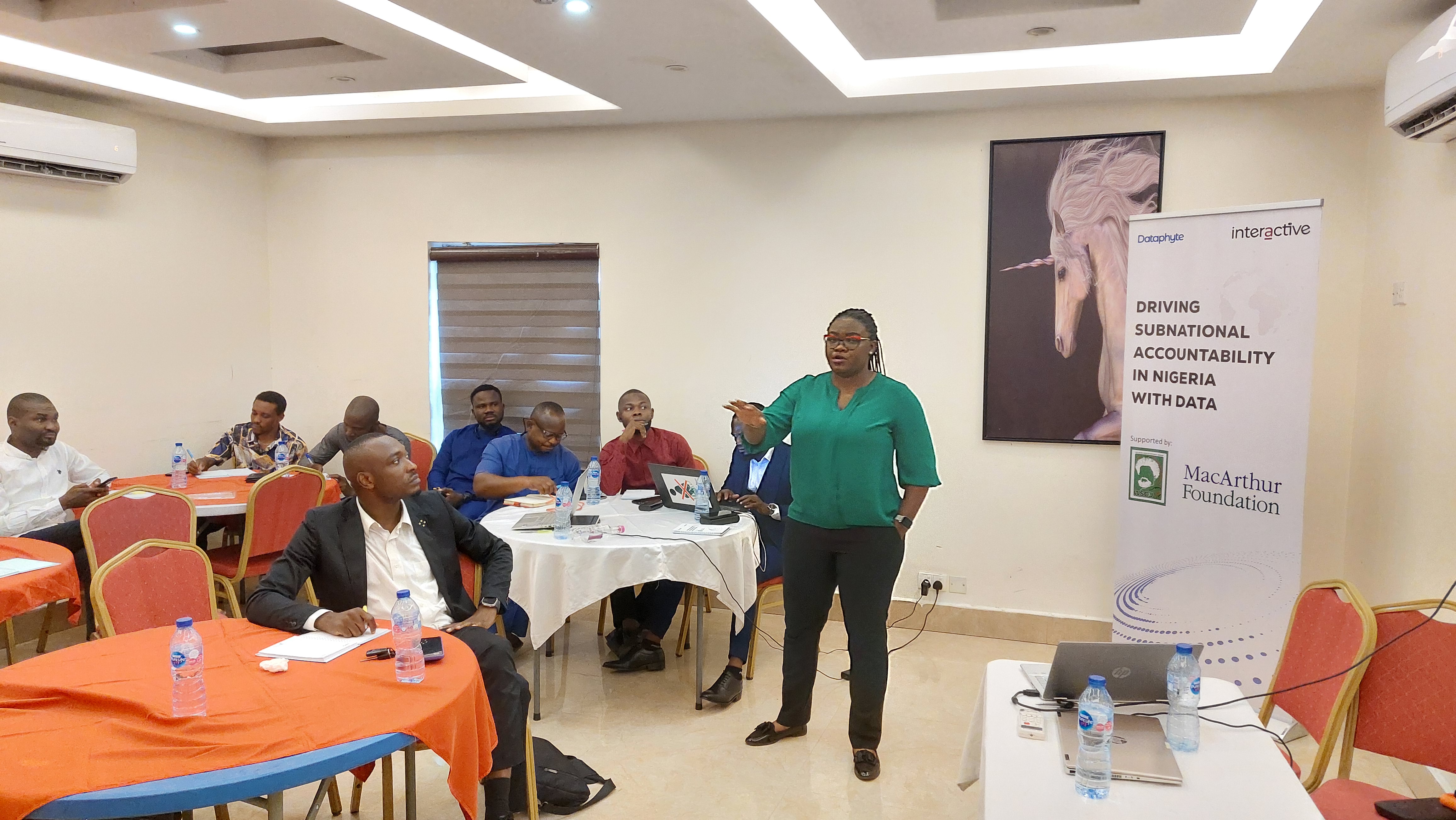
Promoting Access to Information and Social Accountability for the Socially Secluded is an initiative aimed at strengthening access to public information and enabling citizens, journalists and grassroots change agents to use data to participate more effectively in social accountability processes.
The project combines the collection and publication of subnational government data with capacity building in data journalism, data analysis and evidence-based advocacy. By making information on public budgets, procurement, contracts, audits and socioeconomic issues more accessible and usable, the initiative helps civic actors investigate public spending, identify gaps in service delivery and engage government institutions with evidence.
Through data-driven investigations and engagement with government and other stakeholders, the project has supported greater public attention to issues affecting underserved communities, including education infrastructure, abandoned public projects and procurement practices. In several documented cases, investigative reporting generated responses from government officials and contributed to follow-up actions, corrections or renewed attention to public projects.
Ultimately, the initiative seeks to reduce information barriers that limit the participation of socially secluded and underserved groups, strengthen the ability of civic actors to demand transparency and accountability, and create more opportunities for citizens' concerns to influence conversations around public services and government performance.
Evidence that leads to action
Designed to create practical, accountable, and lasting public value.
Data Skills Are Strengthening Accountability Practice
Training has expanded the ability of journalists, researchers, civic actors and media practitioners to use data for investigative reporting and accountability. The report documents improved participant knowledge following data-use training, including stronger understanding of data journalism, fiscal transparency, open contracting and data analysis.
Citizens and Civic Actors Have Greater Access to Public Data
Previously difficult-to-use government information is increasingly being made available in accessible, reusable formats. The project opened datasets covering public finances, procurement, budgets, audits and socioeconomic indicators, giving journalists and civic actors practical evidence they can use to investigate government activities and demand accountability.
Data-Driven Journalism Is Triggering Greater Public Accountability
Investigative reporting based on public procurement and government data has generated responses from government institutions and stimulated wider public discussion. In Oyo State, for example, reporting on the ₦998 million notebook contracts prompted a government response, further reporting uncovered additional procurement concerns, and the investigation was republished by other media organisations.
Investigative Reporting Has Triggered Corrective Responses to Public Projects
Evidence from the investigations shows that data-driven reporting has, in some cases, been followed by changes in government or contractor behaviour. In Osun State, reporting on delayed delivery of 200 computers to Osun State University was followed by delivery of the computers within two weeks, with TETFUND also responding to the report.
Public Reporting Has Influenced Government Project Monitoring and Disclosure
In Ondo State, Dataphyte's investigation into a delayed ₦202 million renovation project prompted further engagement with government representatives. Following the inquiry, the project's delivery timeline on the state's open contracting portal was amended from 12 months to four years and four months, with a revised completion date.
Subnational Governments Are Becoming More Engaged With Open Data
The work has encouraged government institutions to engage more directly with open-data systems. Dataphyte signed agreements with Plateau and Gombe States to support the development of open-data management platforms and conducted capacity-building workshops for their statistical agencies. Discussions with additional state statistical offices also indicate growing interest in developing similar open-data systems.
Supported by
 Collaborative Media Engagement for Development, Inclusion and Accountability (CMEDIA)
In collaboration with
 Wole Soyinka Centre for Investigative Journalism (WSCIJ)
Project moments


Let's build the next
project together
We're always looking to collaborate with governments, donors, civil society organisations, researchers, and innovators to create evidence-driven solutions for public good.
