Governance And Service Delivery
Governing Extreme Heat: Institutional Reforms For A National Heat Management Plan And Resilient Public Services
May 28, 2026 · Isah Kamisu Madachi
Extreme heat is emerging as one of the most consequential environmental pressures on Nigeria. It is a present disruption already affecting livelihoods and exposing millions to serious health risks.
The Heat-Governance Nexus in Nigeria
Extreme heat is emerging as one of the most consequential environmental pressures on Nigeria. It is a present disruption already affecting livelihoods and exposing millions to serious health risks. Temperatures are rising steadily, particularly across the north. In March 2026, the Nigerian Meteorological Agency (NiMet) issued a nationwide heat stress warning, reporting temperatures approaching 41°C in parts of the north and around 39°C in the south. Residents across Benue, Nasarawa, the Federal Capital Territory, Kogi, Niger, Kebbi, Cross River, Oyo, and Ogun, among other vulnerable states, were advised to remain indoors and avoid strenuous activities between 12 p.m and 4 p.m. That four-hour window of caution, incidentally, coincides with the most productive hours for the majority of outdoor workers in the country.
Temperature patterns in northern Nigeria are not simply rising; they are shifting in ways that suggest a deeper structural problem. NiMet records indicate departures of roughly 2-4°C above the 1991-2020 long-term average during recent heat periods. During the more extreme episodes, temperatures reached as high as 47°C in Sokoto on 1 April 2024, with around similar figures recorded in Maiduguri and Yola in the same year, marking the highest heatwave levels ever documented in Nigeria.
Longer-term datasets tell a consistent story. ERA5-HEAT reanalysis data confirm a persistent increase in heat stress over the past four decades, with the Guinea and Sahel zones of northern Nigeria appearing to bear the heaviest burden, particularly during the December-February and March-May periods. Conditions that once represented the upper end of seasonal variation, what meteorologists classify as "very strong" heat stress, now dominate afternoon hours across much of the country during these months, and the count of extremely hot days continues to climb higher, especially over the last decade.
The effects are disturbing. In 2025, several northern states shut down schools during peak heat periods because conditions had become genuinely unbearable for students and teachers alike. Around the same time, data from the Nigeria Centre for Disease Control and Prevention (NCDC) documented a cerebrospinal meningitis outbreak, a disease that thrives in dry, high-temperature conditions. Since late 2024, more than 2,900 suspected cases and over 200 deaths have been recorded across 24 states. In Kebbi State alone, three local government areas accounted for 248 suspected cases and 26 fatalities. Hospitals in Sokoto, Kano, and Lagos have also reported a consistent pattern of rising heat-related admissions, though underreporting likely means the true picture is worse.
Infrastructure, too, is undergoing the pressure of the extreme heat. Research indicates that electricity demand rises dramatically during hotter periods, as average daily load increases by over 27% in the dry season, with roughly 81 additional megawatts drawn for every 1°C rise in temperature at peak conditions. Against a backdrop of already fragile grid infrastructure, that additional demand contributes to recurring instability and load shedding.
What makes this situation harder to address is not only the severity of the heat, but the way it is still being treated. In Nigeria, extreme heat is largely framed as a seasonal inconvenience rather than a governance problem, although its effects cut across health systems, schools, workplaces, and infrastructure simultaneously. No coordinated framework assigns responsibility for managing these risks. Frontline institutions, from primary healthcare centres to local government offices, are left without protocols, budgets, or authority. In practical terms, this means avoidable health burdens, service disruptions, and deepening inequality, falling most heavily on low-income populations who have the fewest means to adapt.
This brief approaches extreme heat from a different angle. Rather than treating it primarily as an environmental issue, it examines it as a governance and public service delivery failure. It maps existing institutional responsibilities across key agencies and tiers of government, identifies critical gaps - particularly around coordination failures and weak subnational mandates, and draws brief lessons from India's Heat Action Plans. On that basis, it proposes a National Heat Management Framework with clear institutional roles, dedicated financing pathways, and stronger accountability mechanisms. The central argument is straightforward: policymakers must act now, before conditions worsen further.
Institutional Mapping and Gap Analysis
Nigeria's response to extreme heat is fragmented across multiple federal agencies and tiers of government, with no institution holding clear, overarching responsibility. This section maps the formal mandates and practical roles of the principal actors, then analyses the systemic gaps that follow.
The table below summarises the core mandates and heat-specific functions of the principal institutions.
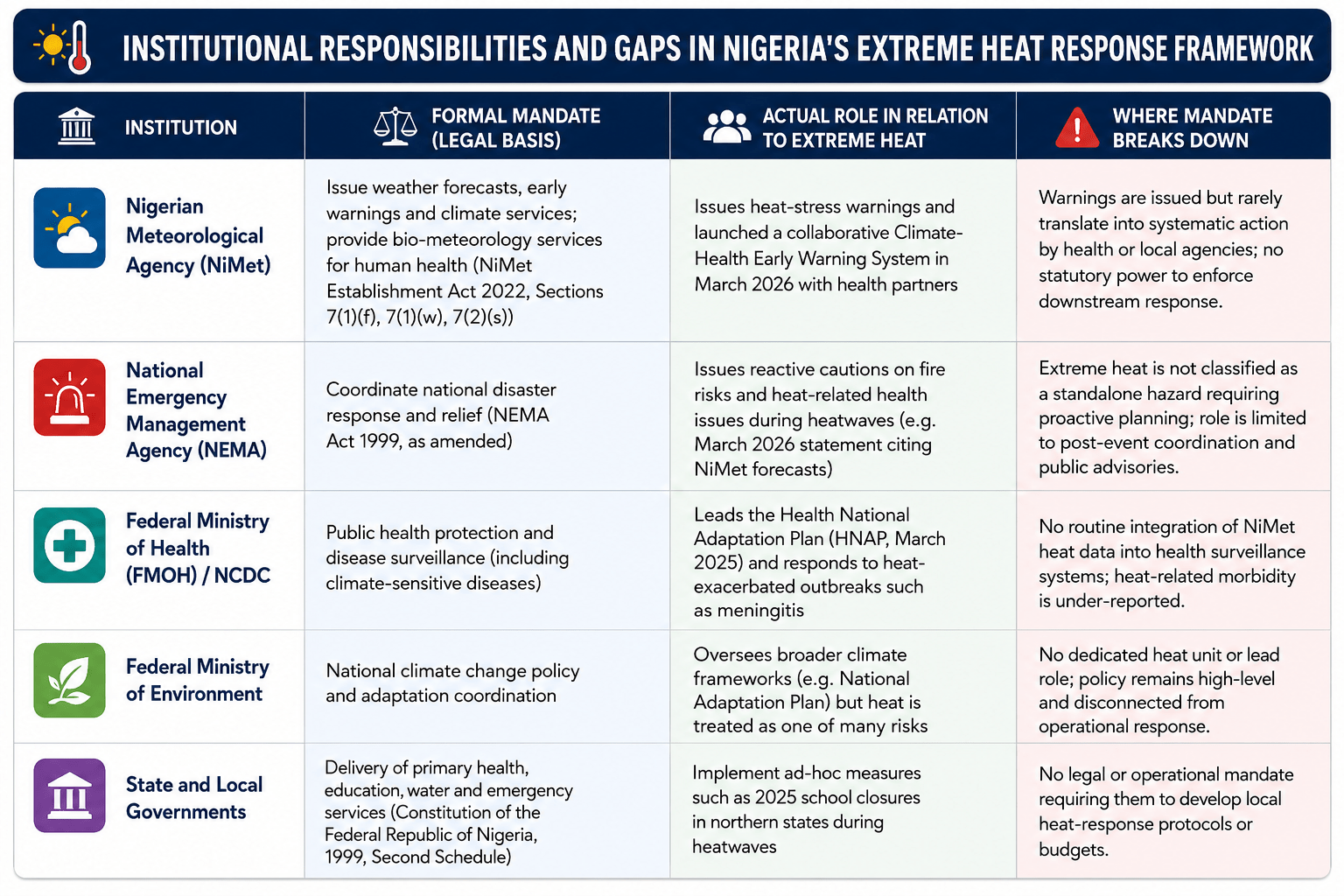
Table 1: Core Mandates and Heat-Specific Functions of Principal Institutions. Source: Author’s compilation from relevant statutes and policy documents.
What the above table makes clear is not institutional absence. Nigeria has agencies for climate, health, and emergency response. What it lacks is a clear line of responsibility when those mandates intersect around extreme heat. NiMet issues warnings; NEMA offers cautions; the health sector responds to outbreaks. But these activities are not connected in any way that produces a coordinated response. Each function operates in isolation, and the gap is most visible at the point of implementation, the level where warnings need to translate into action.
Gap Analysis
Four critical gaps prevent effective heat management. The two most consequential are coordination failures between ministries and the near-total absence of subnational operational mandates.
Inter-ministerial coordination gap
No single agency or standing committee convenes NiMet, NEMA, the Federal Ministry of Health (FMOH), and the Ministry of Environment around heat. NiMet produces timely forecasts and launched a Climate-Health Early Warning initiative in March 2026, yet that data does not systematically feed into health surveillance or NEMA planning. The National Climate Change Policy 2021-2030 speaks of "strengthening synergies," but as of 2026, no National Heat Task Force or equivalent body exists. The HNAP 2025-2030 also acknowledges that "multi-sectoral coordination efforts are required" while admitting that current systems remain siloed. The practical consequence is that warnings rarely reach frontline workers, schools, or local governments in any usable form.
Subnational mandate gap
States and local governments, which actually operate primary healthcare centres, public schools, and water services, have no statutory instruction or dedicated budget line to prepare for or respond to extreme heat. Some northern states closed schools in 2025, but those decisions were only ad hoc, not mandated protocols. The HNAP 2025-2030 "urges" states and local governments to draw from its provisions; that is a recommendation, not an instruction. A Local Government Chairman in Bauchi or Kano has no legal authority to declare a heat emergency or open cooling centres, even though that official is closer to affected communities than anyone in Abuja. The Constitution assigns service delivery to subnational tiers, yet federal policy frameworks provide neither operational guidance nor dedicated resources for heat-specific action at that level.
Heat-health surveillance gap
There is no integrated system linking NiMet heat data with hospital admissions or community health records. As a result, heat-related illnesses are systematically undercounted, and outbreaks such as the recent meningitis surge, exacerbated by dry, high-temperature conditions, tend to be managed reactively rather than proactively.
Budget gap
A simple keyword search for "heat" in the Nigerian Appropriation Bill of 2026, sourced from the Budget Office of the Federation, returns no results. Not one line item. Most climate budget allocations go toward afforestation or erosion control. There is no specific provision for urban cooling or heat-resilient power infrastructure. Climate adaptation funds do exist, but they are not ring-fenced for heat preparedness, early-action protocols, or heat-resilient infrastructure at either the federal or subnational level. When extreme heat strikes, responsibility is diffuse. NiMet forecasts, NEMA issues warnings, and FMOH treats symptoms, but the frontline institutions that deliver public services operate without protocols, budgets, or authority. That institutional vacuum is what produces the service disruptions, avoidable health burdens, and productivity losses described in the preceding section.
Brief Comparative Lessons from India
The global reference point for heat governance remains the Ahmedabad Heat Action Plan (HAP), developed in response to a 2010 heatwave that caused more than 1,344 deaths in a single week in India. Launched in 2013 as South Asia's first comprehensive heat strategy, the plan transformed Ahmedabad from a reactive city into one with standing protocols, by designating the Ahmedabad Municipal Corporation (AMC) as the nodal agency for coordination. A peer-reviewed evaluation published in Epidemiology estimated that the plan was associated with around 1,190 avoided deaths annually, a measurable outcome that helped make the case for scale. The model has since been adopted across 23 Indian states, suggesting that heat mortality may be less an environmental inevitability than an administrative problem with solutions.
Three Transferable Lessons for Nigeria
The Nodal Agency Model: Ahmedabad's experience points to one structural choice above others: a single Nodal Officer within the municipal government, with the authority to convene departments spanning water, transport, and energy during an alert. Nigeria could adapt this by designating a lead agency (a strengthened National Council on Climate Change (NCCC) or a state-level coordinator) with a cross-ministerial mandate that treats heat as a unified governance priority rather than a sector-specific concern.
Integrated Trigger Protocols: In India, meteorological warnings from the IMD are directly linked to the activation of the health system. A "Red Alert" (temperatures at or above 45°C) automatically triggers actions: hospitals defer elective surgeries to free up beds, and public cooling centres open. Nigeria must move beyond NiMet advisories toward legally binding triggers that activate health and public service protocols when defined thresholds are reached.
Subnational Operational Guidelines: The Indian model works, in part, because it is local-first. State and city governments receive Standard Operating Procedures and dedicated funding to implement heat-resilient measures, including cool roof programmes, rather than being left to interpret broad federal guidance on their own. For states like Kano or Bauchi, having a subnational operational guideline may be the difference between a high-level policy document and an intervention that actually protects lives.
There can be no unilateral replication of the Indian model. Context matters, and Nigeria's federal structure, fiscal architecture, and climate profile differ in important ways. But the core lesson is that targeted institutional design choices determine whether a country can convert climate information into effective protection. Nigeria can selectively draw on these elements to address its coordination and mandate gaps through a context-appropriate National Heat Management Framework.
National Heat Management Framework Proposal
Closing the institutional gaps identified above requires more than incremental adjustments. Nigeria needs a National Heat Management Framework that assigns clear responsibilities, integrates data and response functions, and establishes sustained financing. The framework proposed here does not start from scratch. It builds on existing structures around NiMet's forecasting capacity, NEMA's coordination mandate, the Federal Ministry of Health's surveillance infrastructure, and subnational service delivery networks. The aim is to address their current limitations while working within them.
Pillar 1: Institutional Architecture
A National Heat Management Coordination Committee should be established by executive order or through an amendment to the Climate Change Act of 2021. The committee would be chaired by the Federal Ministry of Environment (or, alternatively, the Ministry of Humanitarian Affairs and Disaster Management), with permanent membership drawn from NiMet, NEMA, the Federal Ministry of Health (including NCDC), and representatives from state governments. Its responsibilities would include setting national heat thresholds, coordinating the dissemination of early warnings, overseeing inter-agency protocols, and reporting annually to the Federal Executive Council.
At the subnational level, states should designate a Heat Focal Point, building on NEMA's existing state structures, responsible for local vulnerability mapping, school and workplace guidelines, and activating response measures when thresholds are crossed. This addresses the subnational mandate gap, as the pattern of ad-hoc school closures in northern states in 2025 reflects the absence of statutory guidance, not a lack of concern at the state level.
Pillar 2: Integrated Early Warning and Health Surveillance
NiMet's heat forecasts and advisories, such as the March 2026 warning urging residents across Benue, Nasarawa, FCT, Kebbi, and other states to limit outdoor exposure between noon and 4 p.m., must trigger automatic activation of health protocols, not merely public communication. A formal linkage protocol should require NiMet data to feed into a dedicated heat-health surveillance module within the existing District Health Information System 2 (DHIS2). This module would track heat-related admissions, exacerbations of chronic conditions such as diabetes, hypertension, and kidney disease, and climate-sensitive outbreaks, including cerebrospinal meningitis, which intensified markedly during the 2024-2025 dry-heat season, with over 2,900 suspected cases and more than 200 deaths across 24 states.
Primary healthcare centres, hospitals, and community health workers would receive real-time alerts and predefined response triggers. The shift, in effect, would be from the current reactive approach (NEMA cautions and isolated hospital spikes) to proactive, anticipatory protection.
Pillar 3: Financing and Accountability
A dedicated heat preparedness budget line should be created within the Federal Ministry of Environment's annual appropriation, ring-fenced at a minimum of 0.5% of climate adaptation funds, with a matching conditional grant mechanism for states tied to FAAC transfers. The funds would cover vulnerability mapping, cooling infrastructure in public facilities, and the development and implementation of local response protocols. Accountability would rest with the National Heat Management Coordination Committee, which should report annually to the National Assembly's committees on environment and health, with public dashboards enabling civil society and the media to track progress.
Co-financing partners could include the World Bank, the African Development Bank, UK FCDO, and GIZ, drawing on initiatives such as the 2025 TECA Heat Action Wave and existing climate-health support frameworks. A phased implementation approach would begin with a pilot in high-risk northern states such as Sokoto, Kebbi, Borno, Adamawa, and Kano, followed by a national rollout by Q4 2027.
Taken together, this framework establishes a clear institutional home for extreme heat governance, integrates NiMet warnings with health actions, empowers subnational actors with legal authority and resources, and establishes oversight mechanisms. Without it, warnings will continue to go unheeded, grid strain during dry-season peaks (when average load reaches approximately 2,847 MW, some 27% above wet-season levels) will worsen, and preventable health and service burdens will continue to accumulate. Establishing the National Heat Management Framework is feasible within existing legal structures, and the urgency of doing so now is difficult to overstate.
Recommendations
To operationalise the proposed National Heat Management Framework, the following immediate and medium-term actions are recommended.
First, establish the National Heat Management Coordination Committee by Q4 2026, through executive directive, chaired by the Federal Ministry of Environment with permanent seats for NiMet, NEMA, and the Federal Ministry of Health. The committee should develop and publish national heat thresholds and inter-agency protocols within its first six months.
Second, integrate NiMet early warnings with health surveillance by embedding a dedicated heat-health module within DHIS2. Doing so would enable automatic alerts to primary healthcare centres and hospitals during forecasted heat events, directly addressing the current surveillance gap and enabling proactive response to heat-exacerbated outbreaks, including cerebrospinal meningitis.
Third, mandate subnational heat response plans by requiring every state to designate a Heat Focal Point and to develop local vulnerability maps and protocols covering schools, markets, and outdoor labour by mid-2027. Federal support should include conditional grants tied to compliance with these requirements.
Four, create dedicated financing lines in the 2027 federal and state budgets for heat preparedness, ring-fenced within the Federal Ministry of Environment and matched by states through FAAC mechanisms. Annual reporting to the National Assembly should ensure accountability and provide a public record of progress in implementation.
Five, launch a pilot programme in high-risk northern states such as Sokoto, Kebbi, Kano, Borno, Adamawa, and Katsina in 2027, focusing on public infrastructure cooling measures, community awareness, and occupational protections for outdoor workers.
With northern states already recording temperatures between 44.8°C and 47°C, NiMet repeatedly advising citizens to limit outdoor activity during the midday peak, and dry-season electricity demand running roughly 27% above wet-season levels, the stakes entering 2027 are becoming increasingly difficult to ignore. The approaching 2027 electoral cycle may offer a strategic opening. Policymakers willing to act on extreme heat governance now can demonstrate the kind of concrete, visible reform that builds public trust while protecting frontline services. Establishing the National Heat Management Framework is, at once, a public health imperative, an infrastructure necessity, and a timely opportunity to demonstrate that the government can translate climate information into protection before the next cycle of national accountability.