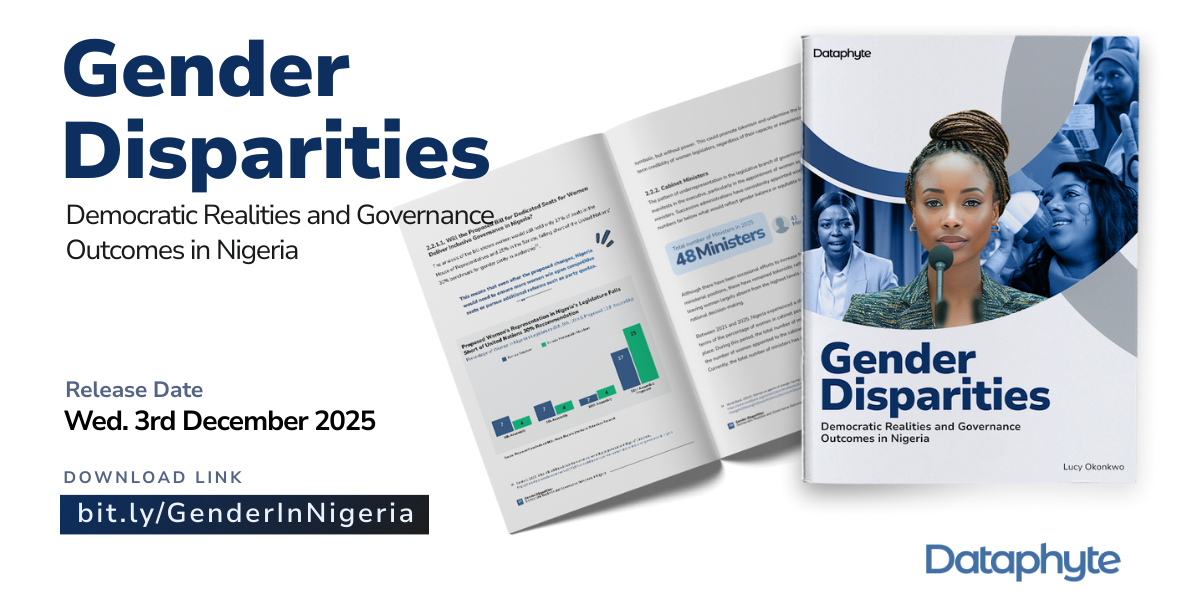
Gender Disparities: Democratic Realities and Governance Outcomes in Nigeria
Published on December 3, 2025
DownloadDownloads: 210
Gender equality is at the core of the idea of democracy. The unequal representation of women in the democratic process could undermine a nation’s democratic realities, affecting policy decisions and governance outcomes.
Democracy is based on the idea that all citizens, regardless of gender, race, religion, or socioeconomic background, have the right to participate in governance, influence decision-making, and enjoy equal protection under the law.
Despite constitutional guarantees of equality, Nigerian women and girls have continued to face significant disadvantages compared to their male counterparts in democratic processes.
According to Inter-Parliamentary Union (IPU) data, Nigeria has the lowest female representation in governance among African nations, with only 7% of its female population represented across both chambers of its National Assembly. This falls short of the 30% recommended by the United Nations (UN) for women in decision-making positions and violates the 35% affirmative action policy of Sections 42, 147 (3), and 14 (3) of the 1999 Constitution as amended, and Article 19 of the African Charter on Human and Peoples’ Rights.
Gender gaps in leadership have been driven by structural, socio-cultural, political, and economic factors, which have systematically delayed the meaningful inclusion of women in political life, from entrenched patriarchal norms and weak local institutional frameworks to global development models that frequently overlook gender equity.
Blog

Primary Health Centre Performance And Universal Health Coverage In Nigeria: A Governance And Accountability Approach To BHCPF Reform
BACKGROUND
Primary Health Centres (PHCs) are the

Dataphyte Country Director Advocates Participative AI Governance at Global Democracy Coalition Webinar
Dataphyte Foundation Country Director, Oluseyi Olufemi, has highlighted the importance of...
Dataphyte to Deliver Live Updates on the 2026 Ekiti Governorship Election
Dataphyte is pleased to announce its plans to provide real-time updates and election coverage...