Strengthening Grassroots Journalists for Data-driven Accountability Reporting: Dataphyte’s Fiscal Accountability Reporting Training in Bayelsa
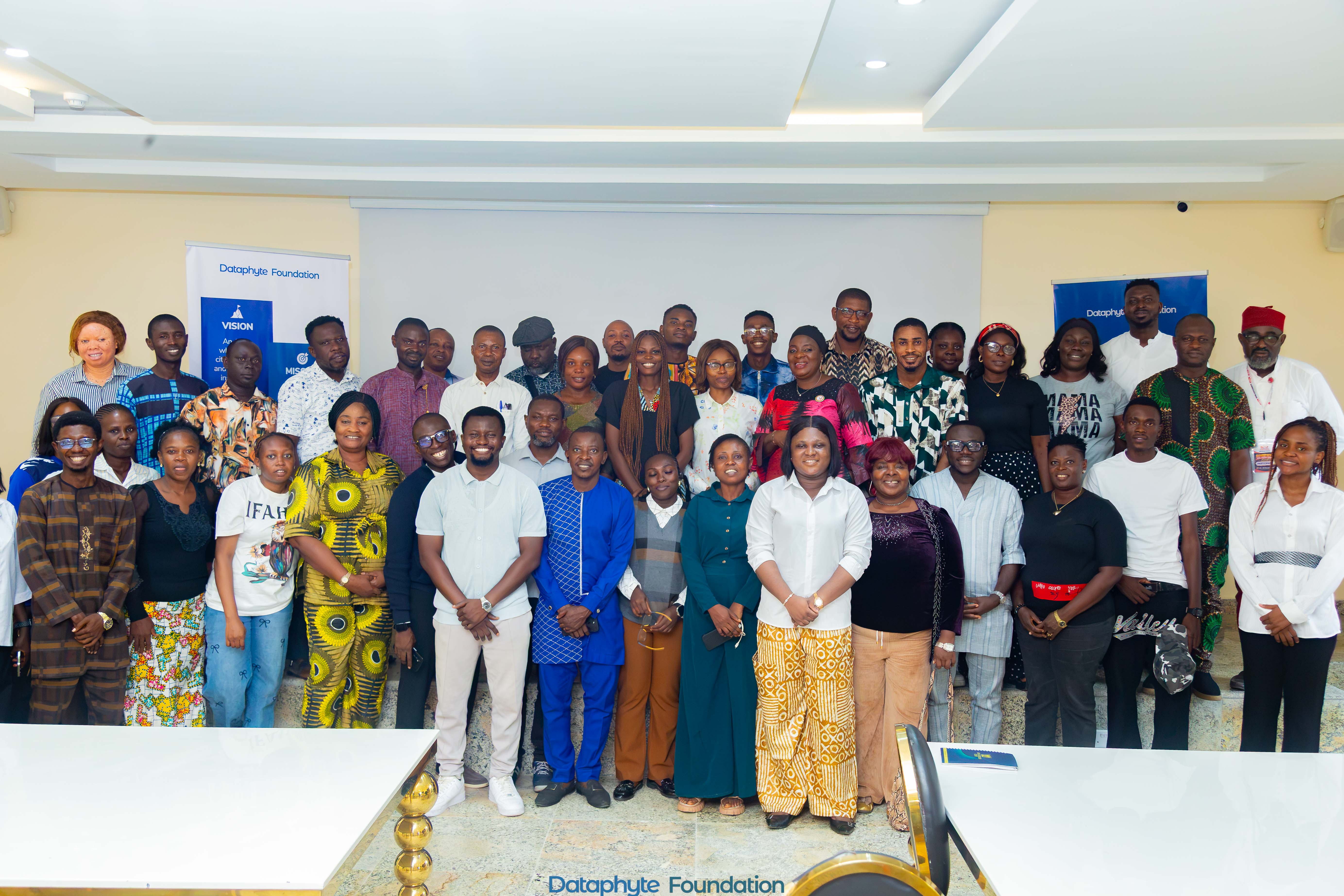
On November 4 and 5, 2026, Dataphyte Foundation held a two-day Fiscal Accountability Reporting Training for journalists and civic actors in Bayelsa State as part of the Building Social Contract Infrastructure for Accountable and Inclusive Governance in Nigeria project, supported by the Ford Foundation.
Bayelsa, a state whose total annual revenue increased from over ₦340.2 billion to over ₦1.22 Trillion in 2025 with 75.23% of it coming from the federal allocation including the 13% oil derivative, the internally generated revenue also rose from ₦16.4 billion to ₦90.3 billion, and its capital expenditure also increased from N329.02 billion to ₦699.57 billion. Additionally, Bayelsa state is also one of the nine oil-producing states, benefiting from the development investment of the NDDC.
Despite all this development which is meant to strengthen human capital development and reduce poverty in the state, the National Bureau of Statistics (NBS) Multidimensional Poverty Index recorded 88.5 per cent multidimensional poverty rate for Bayelsa State, making it the second-highest poverty incidence in Nigeria after Sokoto. The contrast points to a persistent disconnect between the allocation of resources to the state and the development realities experienced by the people in its communities.
In response to this gap between increased revenue and development outcomes, Dataphyte held a two-day Fiscal Accountability Reporting Training in Bayelsa State, to equip journalists, including community, print, and broadcast and civic actors, with the skills, fiscal records, and methodologies needed to highlight public spending, track developmental projects, interrogate the spending, and report more effectively using data to hold public officials accountable and show where government spending aligns with community priorities, where gaps remain, and where more accountability is needed.

Over the two days, participants were trained on public financial management, sourcing and using fiscal data, social accountability tracking, data-driven reporting and storytelling, and community-level data collection. Abdulahi Adebayo, Programmes Manager at Dataphyte Foundation, explained how public funds move from revenue and budgeting to expenditure and project implementation, and how fiscal records can be used to follow spending. Adeyemi Okediran, Programme Officer, showed participants how to track public projects from official records to what is actually delivered in communities, while Khadija Kareem, Managing Editor at Dataphyte, guided them on turning data and field findings into clear stories centred on the people affected.
Participants were also taken through the community-level data collection process for the wider project, including how information on citizens’ priorities will be gathered across Bayelsa’s 105 wards and documented using Goloka, Dataphyte’s human data and intelligence infrastructure tool for primary field research. As the primary tool for the exercise, Goloka will support participants to collect information directly from residents and document community needs in a structured way. Participants also developed accountability story pitches around public projects and challenges in Bayelsa, receiving feedback from the facilitators on their angles and the evidence needed to lead the stories.
At the end of the training, participants reflected on their experience, the knowledge gained and how they intended to apply it in their work. Eunice Nnachi, a writer with Nigerian Pilot Newspaper, shared the case of a road project in her community whose contract was awarded about 14 years ago but was later abandoned. She said the training had given her a clearer approach to tracing the relevant budget and contract records, understanding what happened to the project and documenting its impact on residents.
By strengthening the ability of journalists and civic actors in Bayelsa to document community priorities, trace public spending and verify project delivery, the training responds directly to the disconnect between the resources available to the state and the development outcomes experienced by its communities, supporting the use of evidence to show whether public interventions are reaching the people they are intended to serve and to demand accountability where gaps remain.
Citation
Dataphyte Foundation (2026). “Strengthening Grassroots Journalists for Data-driven Accountability Reporting: Dataphyte’s Fiscal Accountability Reporting Training in Bayelsa.” Dataphyte Foundation. Available at: /accountability/strengthening-grassroots-journalists-for-data-driven-accountability-reporting-dataphytes-fiscal-accountability-reporting-training-in-bayelsa