Dataphyte Foundation Advocates for System Interoperability to Strengthen Service Delivery Accountability at NAS 2025

What Happens When Nigeria’s Data Systems Start Talking to Each Other?
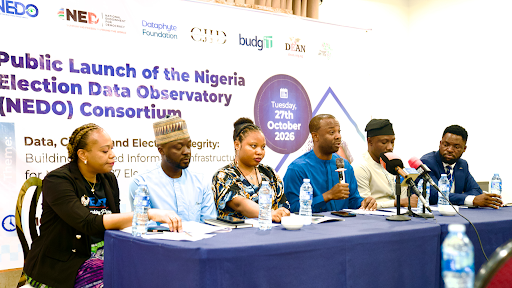
The Dataphyte Foundation hosted an insightful breakout session at the Nigeria Accountability Summit (NAS) 2025, titled “Strengthening Service Delivery Accountability through System Interoperability.” The session explored how Nigeria’s fragmented data systems undermine transparency, efficiency, and service delivery, and how linking them could enhance accountability across sectors.
Moderated by Oluseyi Olufemi, Dataphyte’s Country Director, the panel featured distinguished voices in governance and accountability: Amina Miango of the Centre for Journalism Innovation and Development (CJID), Lucy Abagi of the Public and Private Development Centre (PPDC), Soji Apampa of the Integrity Organisation, and Iniobong Usen of the International Budget Partnership (IBP).

Photo: Dataphyte Foundation
The panellists unpacked how disconnected data systems, across budgeting, procurement, and service delivery, weaken institutional performance and erode citizens’ trust in public institutions.
Connecting the “Data Roads”
Opening the session, Mr Olufemi explained the fragmentation that defines Nigeria’s governance systems. “Ideally, you should be able to track a project from budget approval through contracting, procurement, and disbursement, but our systems are not connected,” he said. “What matters is that these roads, these data roads, must connect.”

Photo: Dataphyte Foundation
He explained that interoperability is not an abstract or technical jargon but a simple, necessary link between systems that enables transparency and efficiency.
“It’s not big English,” Mr Olufemi added with a smile. “It simply means linking systems so that services can work seamlessly for better accountability and efficiency.”
Making Data Work for Citizens
Lucy Abagi of PPDC shared how her organisation uses the Open Contracting Data Standard (OCDS) to make government information understandable to ordinary citizens.
“We wanted the average person to know what projects are coming to their community,” she said. “By simplifying procurement and budget data, we empower citizens to demand continuity and accountability.”
According to her, PPDC is currently supporting more than 15 state governments to adopt open contracting systems, a step toward a more transparent public finance environment.

Photo: Dataphyte Foundation
However, she cautioned that the biggest barriers to interoperability are not technical but political. Many ministries already have digital portals and datasets that remain underutilised due to low data integrity, weak collaboration among MDAs, and a lack of political will.
“Data is often treated as personal property or institutional power rather than a public asset,” Abagi explained. “We’ve seen digital platform proposals stall because agencies were fighting over who would ‘own’ the data.”
She concluded that true interoperability requires a cultural shift. “Despite advocacy, social media campaigns, and protests, data systems will not connect until data ownership becomes collective rather than competitive.”
Integrity, Corruption, and the Price of Inefficiency
Soji Apampa, Co-founder and CEO of the Integrity Organisation, offered a candid view of how corruption thrives in government silos.
“Integrity and corruption can exist side by side. You just hope one overpowers the other,” he remarked.
Mr Apampa observed that while Nigeria has been removed from the Financial Action Task Force (FATF) Grey List, the fundamental weaknesses that enabled financial opacity remain.

Photo: Dataphyte Foundation
“Our systems don’t talk to each other. When regulators like the CBN, SEC, and others operate in silos, it creates loopholes for corruption and money laundering,” he explained.
He described how financial institutions exploit these gaps, moving illicit funds through holding companies outside regulatory oversight.
“Data interoperability has real consequences,” he warned. “It’s not just about citizen access; it’s about the very survival of the Nigerian state.”
Addressing why the public sector remains resistant to data integration, Mr Apampa stated that “In the private sector, inefficiency is a weakness; competitors exploit it for profit. But in government, inefficiency is an income stream. It’s how some people make money. Every disconnection between systems creates room for manipulation.”
He added that ongoing political transitions and the rising demand for performance tracking present a unique opportunity to institutionalise interoperability.
“Until we make it politically profitable to be transparent, the system will resist change,” he concluded.
Data, Democracy, and the Power of Storytelling
Amina Miango of the Centre for Journalism Innovation and Development (CJID) highlighted the media’s crucial role in making data meaningful to citizens.
“We are committed to ensuring that African democracies remain sustainable,” she said. “We do this through projects like our elections and health programmes, and our social accountability initiative that tracks how government budgets are implemented.”

Photo: Dataphyte Foundation
Ms Miango noted that CJID’s Dubawa fact-checking platform champions data-driven journalism, ensuring that every story is grounded in verified information.
“We train journalists to understand and use data so that the public receives factual, context-rich information,” she said.
However, she raised concerns about capacity gaps in the media ecosystem.
“For a country of over 200 million people, we don’t yet have enough trained journalists producing data-led reports,” Ms Miango observed. “We need stronger investments in grassroots journalism, journalists who can communicate complex governance issues in local languages and contexts that citizens understand.”
She ended with a call for localisation in storytelling. “It’s not enough for Premium Times or Daily Trust to tell the story; the person in Pankshin or Potiskum should hear it from someone in their own community, in their language, and in terms that make sense to them.”
When Data Fails, Communities Suffer
From a grassroots accountability perspective, Iniobong Usen of IBP emphasised how poor data connectivity affects service delivery in critical sectors like healthcare and agriculture.
“We’ve worked with social movements and community organisations to improve accountability in health and agriculture,” he said. “But local actors often lack access to data; they don’t know what’s budgeted for their communities, what’s been released, or who the beneficiaries are.”

Photo: Dataphyte Foundation
He pointed out that without reliable tracking systems, resources frequently fail to reach their intended targets.
“We’ve seen cases where farm equipment and fertilisers meant for smallholder farmers never get to them,” he explained.
Mr Usen stressed that open data and budget literacy are essential for empowering citizens to monitor resource use and demand accountability.
“Interoperable data isn’t just a tech issue,” he concluded. “It’s about whether a farmer gets his tractor or a woman receives antenatal care; it’s about real lives.”
Towards an Interconnected Future
The breakout session reaffirmed Dataphyte Foundation’s commitment to promoting data interoperability as a foundation for accountable governance and inclusive service delivery.
As Mr Olufemi noted in closing, the path forward requires collaboration, not just across technology platforms but among government, civil society, the media, and communities.
By connecting Nigeria’s “data roads,” the session argued, the country can move closer to an accountable, transparent, and efficient governance system that truly serves its people.
Citation
Dataphyte Foundation (2025). “Dataphyte Foundation Advocates for System Interoperability to Strengthen Service Delivery Accountability at NAS 2025.” Dataphyte Foundation. Available at: /technology/dataphyte-foundation-advocates-for-system-interoperability-to-strengthen-service-delivery-accountability-at-nas-2025