Dataphyte Foundation Trains and Inducts 10 Journalists for its Biodiversity Reporting Fellowship
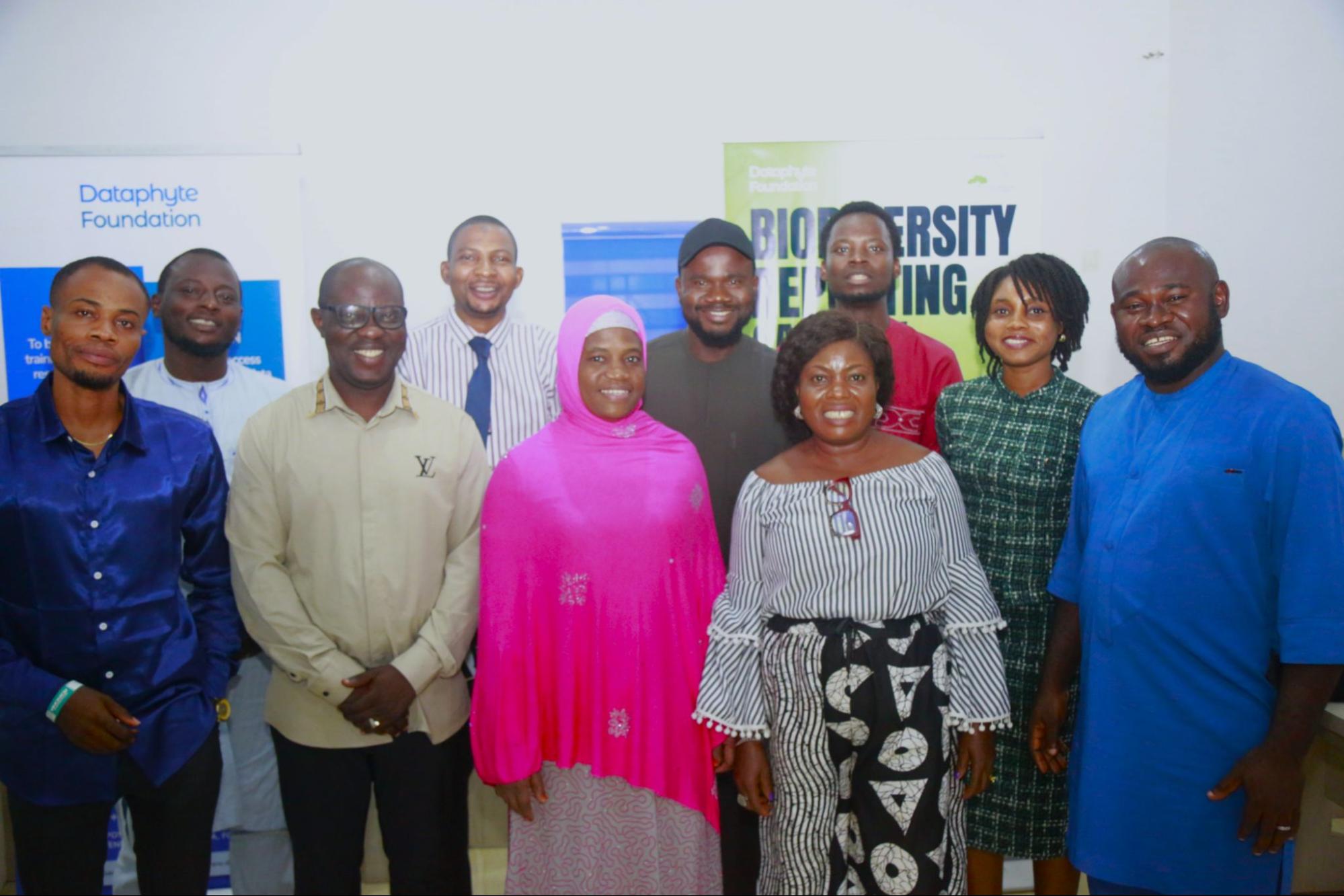
Dataphyte Foundation trained and inducted 10 journalists into its Biodiversity Reporting Fellowship during a biodiversity reporting workshop held on August 27, 2025.
This workshop, which marks the commencement of Dataphyte's Biodiversity Fellowship, was organised to train 10 journalists on data-driven biodiversity reporting and strategic storytelling to spotlight major biodiversity issues across major hotspots in Nigeria, including threats to Nigeria’s rich ecosystems and the varying conservation efforts by the government, civil society organisations, and the private sector.
The Fellowship aims to strengthen journalists’ capacity to produce data-led biodiversity stories that go beyond surface reporting. Fellows will be equipped to draw connections between biodiversity loss, unethical environmental practices, and the worsening climate crisis, thereby amplifying accountability and driving policy conversations.
Nigeria is rich in biodiversity, featuring a wide variety of plant and animal species across various ecosystems, including rainforests, savannas, and wetlands. However, this biodiversity faces significant threats from human activities, unsustainable environmental practices, changes in weather patterns, land use changes, and ongoing industrial developments.
Despite the threats to Nigeria’s ecosystem, media coverage of these issues remains limited. This is particularly evident when compared to the extensive media coverage that climate change and other environmental issues receive.
To bridge this gap, Dataphyte Foundation, with support from the Earth Journalism Network(InterNews), has created the Biodiversity Reporting Fellowship to enhance how the media report biodiversity issues in Nigeria, including the threats, conservation efforts, and the impact that the depleting ecosystem has on the country’s socio-economic system.
Program Manager for the Biodiversity Media Initiative at the Earth Journalism Network, Mike Shanahan, welcomed the fellows and emphasised during his welcome remarks that the initiative’s goal is to improve both the quality and quantity of media coverage on biodiversity across different regions.
He highlighted the connections between biodiversity issues and other development and environmental concerns. Mr Shanahan, encouraged the fellows, as they prepared to head into the field to write stories, to connect all biodiversity narratives to the people they affect and to the communities involved. He also stressed that biodiversity stories are interlinked with other themes such as climate change, the economy, and health. Therefore, he urged the fellows to frame each story within this broader context.

During the workshop, the Senior Conservation Manager, Species Programmes at the Nigerian Conservation Foundation, Dr Stella Egbe, provided valuable insights to the fellows regarding Nigeria’s various biological diversities and ecosystems. She discussed public and governmental perceptions of conservation as well as the national and international frameworks that guide biodiversity conservation in Nigeria.

Dr Stella emphasised, “The conservation of natural resources is often misunderstood as an elitist or luxurious barrier to growth. In reality, the protection and sustainable management of biodiversity and ecosystems are critical enablers of national development.“
During the second session, a Senior Reporter at Premium Times, Abdulkareem Mojeed, spoke on the importance of community engagement when reporting on biodiversity loss, ecosystem depletion, and other environmental issues. He highlighted the need for fellows to go beyond event-based or informative reporting, encouraging them to dive deeper into their stories. He also provided practical tips on capturing on-the-ground impacts by showing the real-world effects of biodiversity loss in communities.

Dataphyte Academy Coordinator, Kehinde Ogunyale, trained the fellows on data-driven biodiversity reporting and techniques for integrating data into biodiversity stories. He emphasised the importance of asking questions and interrogating every figure and idea beyond the surface level.

The fellows are drawn from major media platforms like Premium Times, NatureNews, EnvironNews, Ripples Nigeria, The Mail Newspaper, News Agency of Nigeria (NAN), The Will Nigeria, RM Times, BusinessDay Media Limited, and the Foundation for Investigative Journalism (FIJ).
In the coming days, fellows will receive mini-grants to conduct field investigations across various states in Nigeria, reporting on a range of biodiversity-related issues.
Citation
Dataphyte Foundation (2025). “Dataphyte Foundation Trains and Inducts 10 Journalists for its Biodiversity Reporting Fellowship.” Dataphyte Foundation. Available at: /biodiversity/dataphyte-foundation-trains-and-inducts-10-journalists-for-its-biodiversity-reporting-fellowship